Listening From the Inside
The courage to be changed

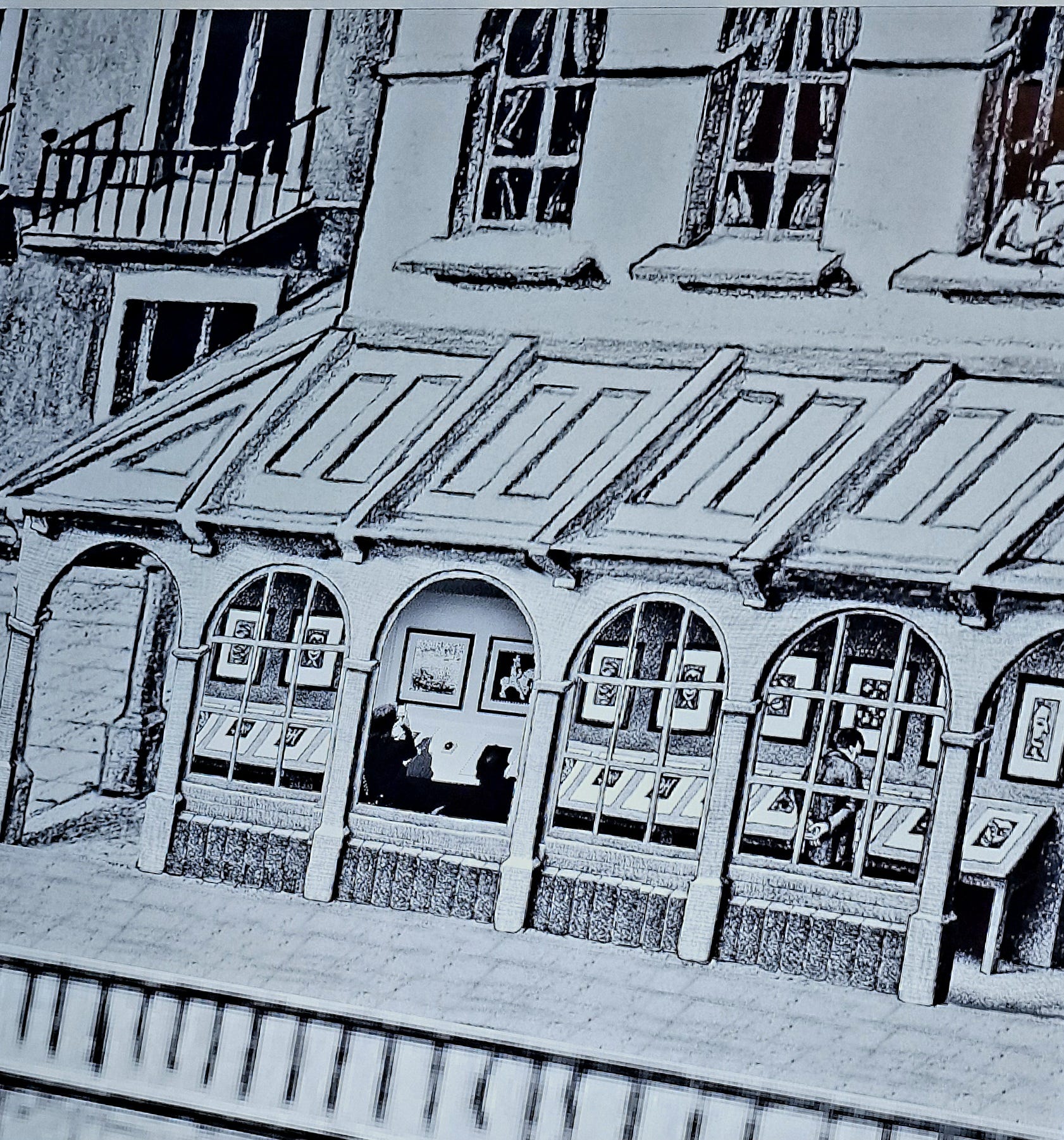
This weekend I visited an exhibition of the Dutch artist M.C. Escher. Like most visitors, I spent my time marvelling at his impossible staircases, his worlds where birds become fish, and his ever-shifting visual puzzles. Escher has a way of making things you think you know suddenly unknowable.
One display allowed visitors to step inside one of his works. Looking through a framed opening on a veranda, I took a photograph of myself taking a photograph. For a brief moment, I was no longer just looking at Escher’s world. I had become part of it.
At first I encountered this strange and unsettling feeling in a childlike way. How novel this felt to be a part of someone’s art in an instant. And then as I grew accustomed to the feeling of reflecting on myself taking part, I realised this is not unlike what we do when we listen. We step into a space like the veranda of Escher’s image, and we allow ourselves to be changed by taking part in the experience.
Listening, said the actor and science communicator Alan Alda, is being willing to be changed by another person.
I love this definition that shows us how listening involves the risk of being changed. To genuinely listen is to accept the possibility that what arrives might alter you, and your carefully constructed view of the world might become less certain in an instant.
Escher understood this when he allegedly said, “We adore chaos because we love to create order.”
I think what he meant was that we spend our lives creating order. We develop explanations, categories, identities and beliefs that help the world make sense. And then we spend our time becoming sure of them until something unexpected arrives.
This could be a new idea or a person with a different perspective. For a moment, the order breaks down, and we are asked whether we can tolerate that brief period of uncertainty long enough for a larger understanding to emerge. That is what art does, and I think listening does this, too.
Art expands the boundaries of what we are capable of hearing. A conversation allows us to enter a mind that is not our own. Neither of these experiences give us certainty, but what they offer us is our capacity to receive what was previously beyond us.
Walking through the exhibition, I found myself wondering whether Escher’s greatest illusion was not his impossible staircases or his endless waterfalls. Perhaps his greatest trick was showing us that seeing and understanding aren’t the same thing. We can look directly at something or someone, see them and still not hear them. But when we stay and give that thing or person our time and space, sometimes we can learn to hear them. What has changed is what we are finally capable of hearing. What has changed is us.
I am often asked how we can increase our hearability. Walking into Escher’s image, I wonder whether the answer begins with a simple act of courage, to step inside the frame and allow ourselves to be changed by what we find there.
Love this!!!: Art expands the boundaries of what we are capable of hearing. A conversation allows us to enter a mind that is not our own. Neither of these experiences give us certainty, but what they offer us is our capacity to receive what was previously beyond us.
We appreciate it when others take this courageous posture with us. I like the way you have brought forward the openness to being changed through listening.
And I hope I get a chance to see this exhibit. I love his work.